
Welcome to the June Edition of The Solar Dispatch!
Last month, we explored the engineering details of a solar plant. This month, we look at how changing policies are reshaping solar economics and what that means for businesses planning their energy future. In this edition, we cover:
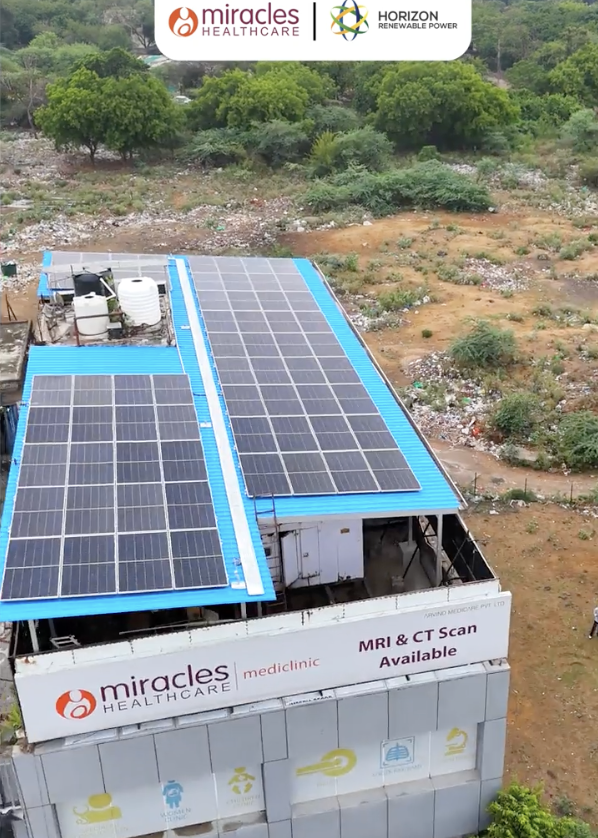
40 kW system up and running in Gurgaon!
This month, Horizon completed a 40 kW rooftop solar installation at Miracles Healthcare Clinic in Gurugram. The project will help the healthcare facility reduce electricity costs while ensuring reliable, clean energy for its operations.
India’s reservoirs can host 102 GW of floating solar, says first national assessment.
MNRE opens a one-month window for provisional commissioning of solar projects awaiting ALMM clearance. This allows eligible projects to generate, inject, wheel, bank, and settle electricity during the interim period.
India adds 4.6 GWh of battery storage capacity in Q1, a 939% increase from the 442.7 MWh installed in the previous quarter, according to Mercom India Research’s “Q1 2026 India Energy Storage Landscape Report.” Additionally, India is also getting ready for a ₹12,000 crore push for local battery component manufacturing.
This month, we are shining the spotlight on one of India’s biggest builders, literally! Cement drives infrastructure, but its carbon footprint is massive. In this edition, we see how solar power can help.
Cement quite literally builds modern India, but it comes with a steep carbon cost. India, the world’s second-largest cement producer (391 MT annually), generates ~226 MT of CO₂ emissions from this sector alone.
To grow sustainably, the industry must pivot and the solution is right above us! Solar power is already helping India’s cement leaders lower emissions, lock in savings, and strengthen competitiveness. Read more
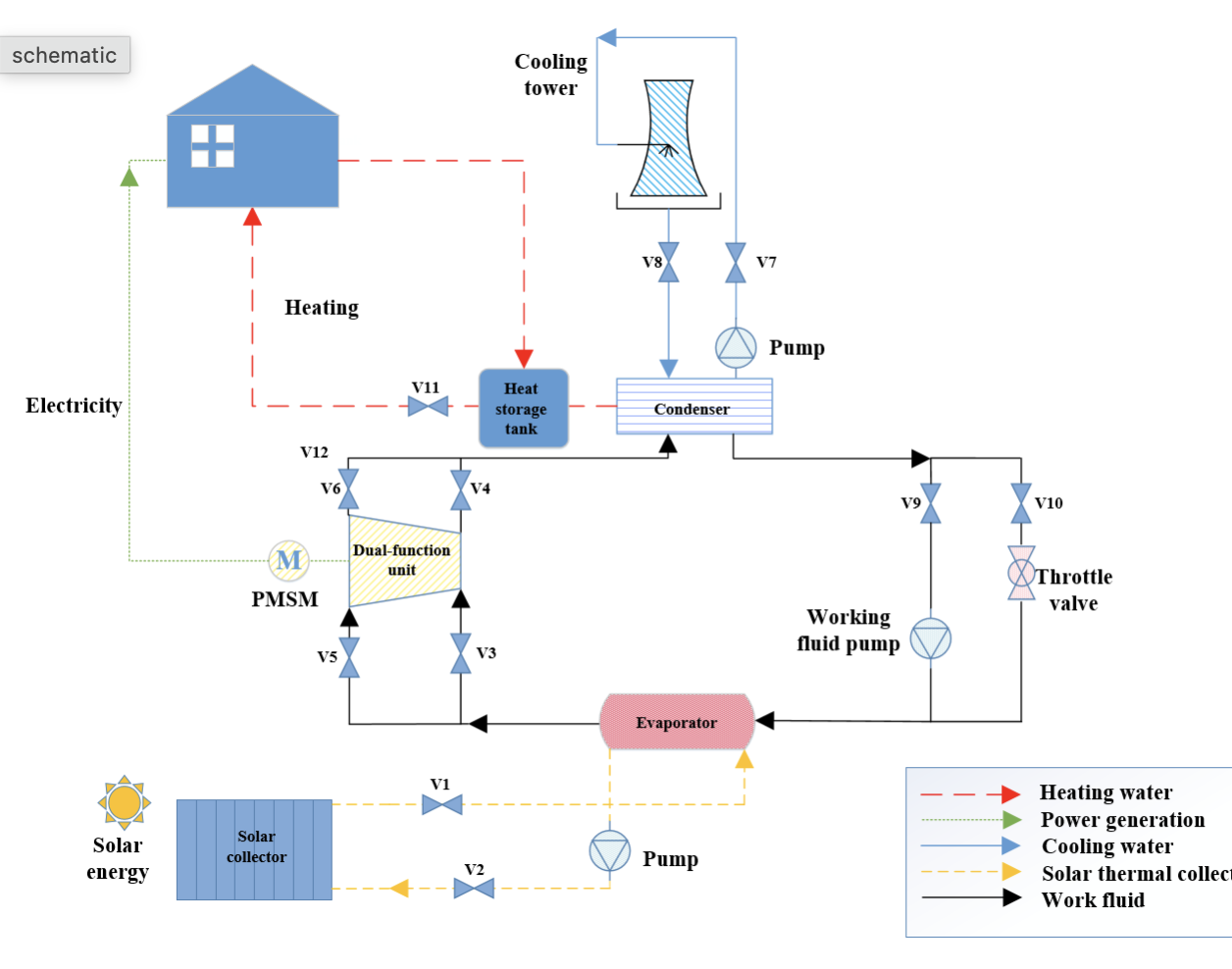
How to power buildings with solar-driven reversible heat pumps, organic Rankine cycle
Chinese researchers have devised an energy system that combines solar-driven reversible heat pumps with organic Rankine cycle (ORC) technology to provide an efficient energy supply for buildings. The reversible heat pump can deliver heating or cooling, while the ORC system enables the recovery and conversion of low-grade thermal energy into electricity.
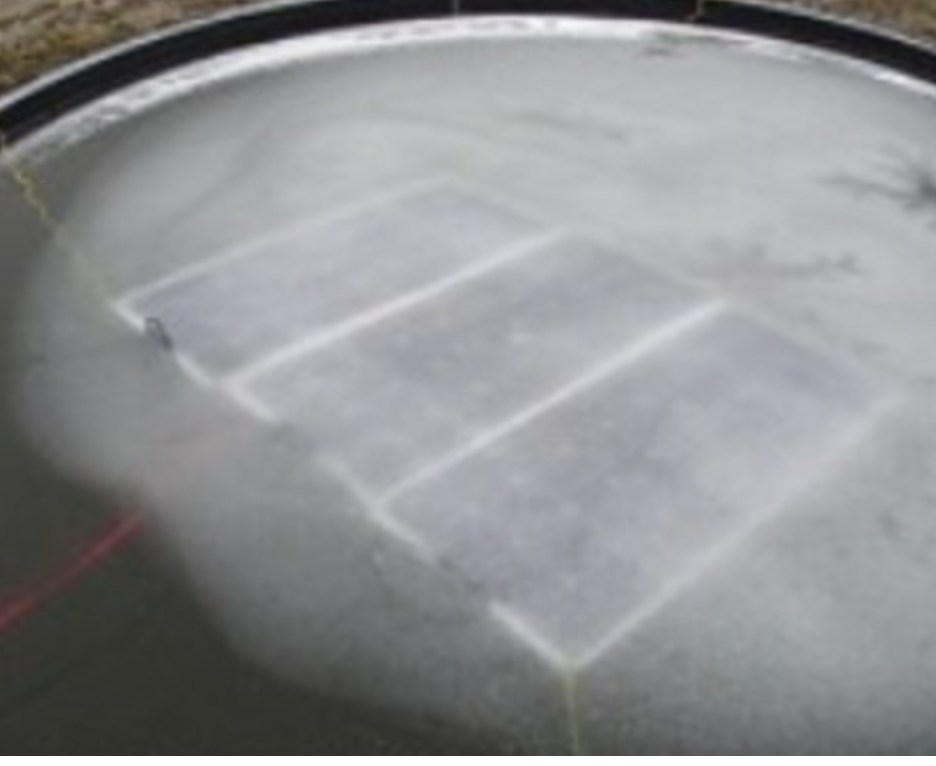
Foam-based floating PV system for cold climates
Canadian Researchers demonstrated that a foam-backed floating solar PV system with an air-bubbler can operate through freezing winters, keeping ice at bay with minimal energy use. The system produced up to 2.7% more energy than conventional PV models, reduced water evaporation, and gave a payback period of about 4.2 years under high electricity prices.
Australia extends solar R&D funding to cut costs below $20/MWh
The Australian Renewable Energy Agency (ARENA) is funding ($220m) the Australian Centre for Advanced Photovoltaics (ACAP) until 2032 to accelerate development of ultra-low-cost solar technologies. The aim is to cut solar electricity costs by a third and bring it below $20/MW/hour.
That’s it for this month and year, folks! Remember, Solar isn’t just a purchase, it’s a long-term decision about cost, reliability, and governance.
If you are planning your solar journey, whether for your home or business, we would love to be part of the conversation. From C&I businesses and MSMEs to RWAs and homeowners, Horizon Renewable can help you find the solar solution that fits you to the T.
And if you’re already using solar, we would love to hear your experiences. Share your journey with us. It could inspire many more to make the switch!
Contact us at 98111 21157 | 84482 95965 | info@horizonrenewablepower.com