Welcome to the April Edition of The Solar Dispatch!
As April closes and the financial year resets, many businesses are actively evaluating solar investments. In this edition, we take a closer look at a question that continues to shape these decisions, price vs performance, and what it really means for long-term returns. The newsletter covers:
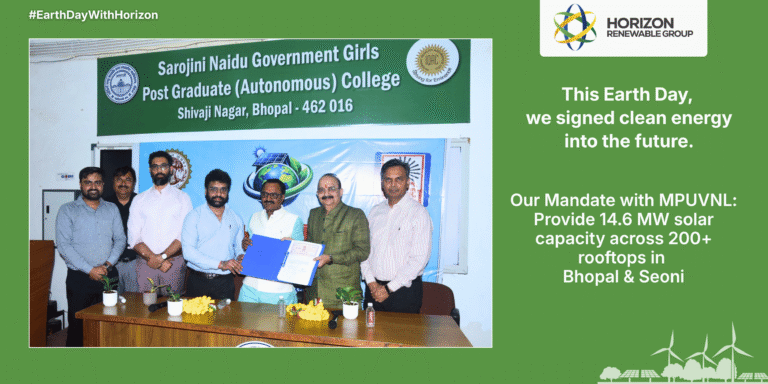
We are pleased to announce that Horizon Renewable Power has been selected as successful bidder by the with Madhya Pradesh Urja Vikas Nigam Limited (MPUVNL) to implement rooftop solar projects across government institutions in Madhya Pradesh.
This initiative covers over 200 sites with a cumulative capacity exceeding 14 MW, including installations at public buildings such as educational institutions, health centers, hospitals, police infrastructure, and more.
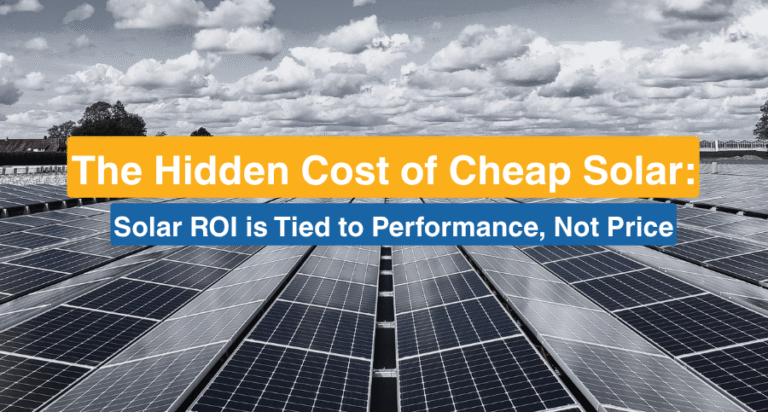
Since 2016, our team has worked across multiple rooftop solar projects, both new installations and underperforming systems that needed intervention.
A consistent pattern has emerged. Many of these systems were designed to minimise upfront cost. But within months of commissioning, gaps start to show, lower-than-expected generation, avoidable downtime, and design limitations that are difficult to correct post-installation. This is what led us to write this month’s featured piece where we unpack:
India to increase penalties on wind and solar generators for deviating from supply pledges
The Ministry of Power has decided to eliminate the requirement for Power Telecom Coordination Committee (PTCC) clearance for transmission lines from July 1, 2026, to reduce delays in project execution.
Solar plants told to cut up to 80% of generation in Rajasthan. The third largest state in rooftop solar installations, is curtailing solar and wind power generation due to low demand and the inability to shut down coal-fired thermal plants. The state has renewable projects of about 60 GW awaiting transmission links.
India may face solar cell crunch from June on local sourcing rules, industry body says. The country’s domestic production capacity of 25.6 GW falls short of the 50 GW demand, with over 90% of cells currently imported from China. This could delay clean energy projects and increase module prices.
US imposes 123% preliminary anti-dumping duty on Indian solar imports. The latest duty adds to existing duties of over 125%, taking the combined tariff burden on Indian solar exports to more than 200%, making shipments to the US unviable. However, Indian solar firms have already diversified exports to Europe and West Asia.
First phase of PM-KUSUM scheme failed to meet targets. The report revealed that Component A (setting up small-scale grid-connected solar plants on farmers’ land) stood at just 8.4% of the target, which was 10,000 MW. In case of Component C-FLS (solarisation of agriculture pumps), only 38.2% of the 35.6 lakh pumps sanctioned were solarised,
This month, we are shining the spotlight on one of India’s biggest builders, literally! Cement drives infrastructure, but its carbon footprint is massive. In this edition, we see how solar power can help.
Cement quite literally builds modern India, but it comes with a steep carbon cost. India, the world’s second-largest cement producer (391 MT annually), generates ~226 MT of CO₂ emissions from this sector alone.
To grow sustainably, the industry must pivot and the solution is right above us! Solar power is already helping India’s cement leaders lower emissions, lock in savings, and strengthen competitiveness. Read more
US Federal court halts Trump administration’s orders impeding solar, wind development
Solar PPA Prices Rise 13% YoY in North America, While Declining 13% in Europe. While solar and wind prices in the U.S. rose due to policy uncertainty, supply constraints, and growing power demand, European solar PPA prices continued to decline due to weaker demand and market challenges, according to LevelTen Energy’s Q1 2026 PPA Price Index.
Global solar additions reached record 511 GW in 2025, says IRENA. Latest figures from the International Renewable Energy Agency show solar contributed the majority of a record 692 GW of renewables capacity added worldwide last year.
Hybrid solar-rain energy harvester, weather-independent power generation.
It uses perovskite solar cells & triboelectric nanogenerator tech to capture energy from sunlight & the kinetic energy of raindrops hitting the specialized surface. The device has a patented thin-film surface, 100 nanometers thick, that generates more than 110 volts of energy from a single raindrop while keeping the PV surfaces dry.
Internet-of-Things could bring solar module water cooling closer to commercial viability
A Czech team developed an IoT system using MQTT to autonomously cool PV panels, boosting daily energy yield by 7.38% with a positive net energy balance.
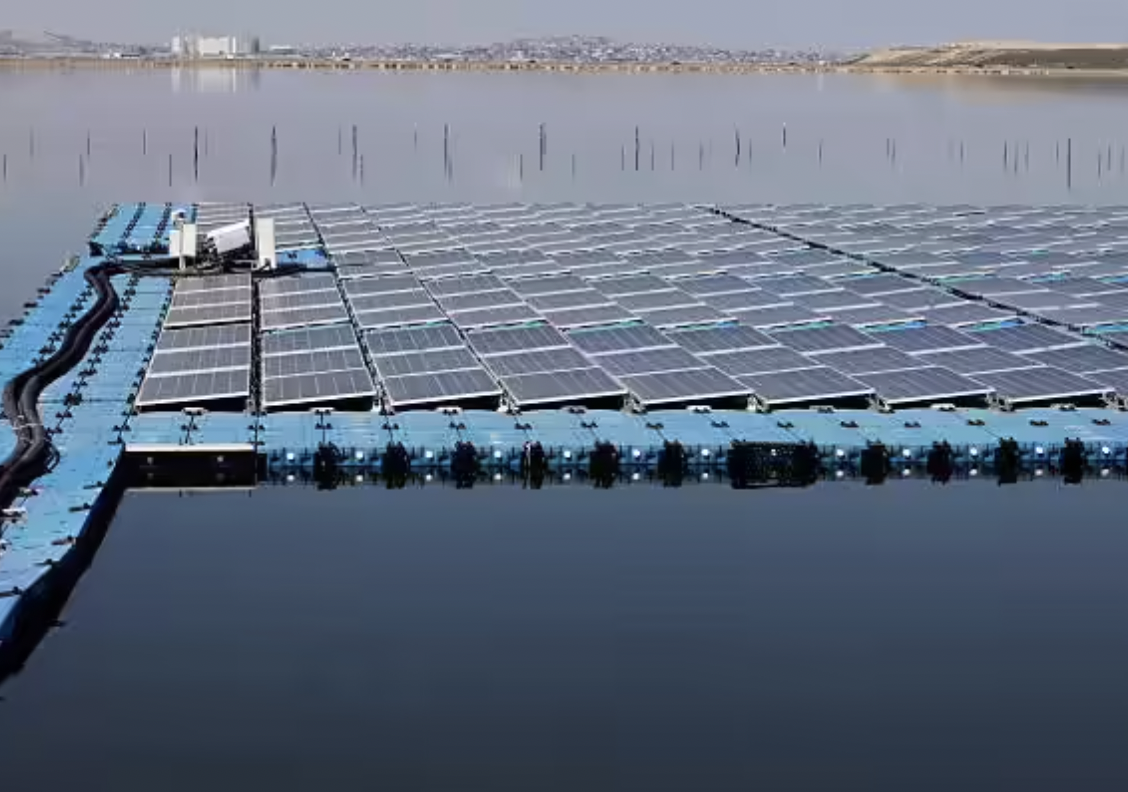
Delhi explores using water bodies and drains for floating solar plants.
This initiative aims to harness solar power without using land. If successful, the government will expand the project to other water sources. This move supports Delhi’s renewable energy targets and pollution control efforts.
That’s it for this month and year, folks! Remember, Solar isn’t just a purchase, it’s a long-term decision about cost, reliability, and governance.
If you are planning your solar journey, whether for your home or business, we would love to be part of the conversation. From C&I businesses and MSMEs to RWAs and homeowners, Horizon Renewable can help you find the solar solution that fits you to the T.
And if you’re already using solar, we would love to hear your experiences. Share your journey with us. It could inspire many more to make the switch!
Contact us at 98111 21157 | 84482 95965 | info@horizonrenewablepower.com