
Welcome to the May Edition of The Solar Dispatch!
Last month, we made the case for prioritising quality over price in solar. This month, we take the next step: understanding what “quality” actually looks like in a solar plant, and the engineering decisions that directly impact long-term performance, reliability, and ROI. In this edition, we cover:
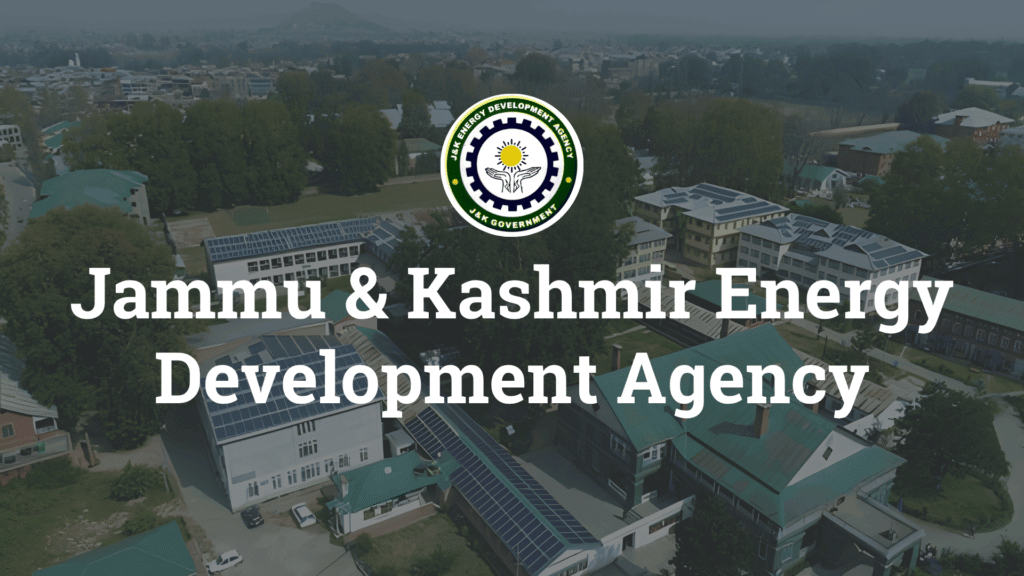
This month, Horizon continued expanding its government and institutional solar portfolio across multiple states. Along with our selection for the 36 MW rooftop solar program with JAKEDA in Jammu & Kashmir and a 450 kW rooftop solar deployment at Rashtrapati Niketan, Dehradun, we also signed Power Purchase Agreements for 4.2 MW of rooftop solar installations across 68 government buildings in Bhopal under the RESCO model.

A solar plant is not just panels on a roof. The real difference between an average installation and a high-performing asset lies in hundreds of engineering decisions made long before commissioning day. This month’s Horizon Insights breaks down what quality actually looks like in solar plant engineering, in practical, non-technical terms that business leaders can evaluate with confidence. Read the full article: A Business Owner’s Guide to Solar Plant Engineering

Delhi Vidhan Sabha’s Heritage Building Goes Green, Saves on Power Bills. The 500 kW plant will occupy 3,250 square metres atop the heritage building and is expected to reduce the annual power bill of ₹2 crore to zero. The installation is scheduled for completion in 45 days, ahead of the monsoon session.
As per the Mercom India Research’s Q1 2026 India Solar Market Update, India added 15.3 GW of solar capacity in Q1 2026, an increase of 143% YoY. Large-scale projects accounted for 82% of total quarterly additions. Solar accounted for 77% of the new power capacity added in the country in Q1 2026, with cumulative installed solar capacity of 152 GW.
Gujarat claims No. 1 spot in RE capacity, pips Rajasthan with 47,178MW installed capacity
Power ministry approves transmission lines for 650 MW renewable projects. The Ministry of Power has authorized three renewable energy companies to lay overhead transmission lines to connect 650 MW of renewable energy projects in Rajasthan and Andhra Pradesh.
India lost 300 GWh of renewable energy due to transmission constraints in Q1 2026: Ember
India’s solar industry seeks higher power prices amid record demand. Peak power demand has hit record highs recently. The industry group argues that the cap prevents them from recovering losses during low-demand periods
IIT campuses launch six-month residential programme to train graduates in renewable energy systems. The programme will train BE/BTech graduates and early-career professionals in power electronics, system integration, and control systems through lectures and project-based learning.
This month, we are shining the spotlight on one of India’s biggest builders, literally! Cement drives infrastructure, but its carbon footprint is massive. In this edition, we see how solar power can help.
Cement quite literally builds modern India, but it comes with a steep carbon cost. India, the world’s second-largest cement producer (391 MT annually), generates ~226 MT of CO₂ emissions from this sector alone.
To grow sustainably, the industry must pivot and the solution is right above us! Solar power is already helping India’s cement leaders lower emissions, lock in savings, and strengthen competitiveness. Read more
New German rule allows larger plug-in PV without an electrician. Germany’s revised VDE standard enables simplified registration of larger plug-in photovoltaic systems and storage, removing previous capacity limits for self-installation. The German government also adopts law on backup power capacity aimed at the deployment of 11 GW of new dispatchable capacity in the country to ensure a reliable electricity supply at times when renewable generation is not sufficient.
Abu Dhabi solar capacity to top 30GW by 2035, says EWEC. By 2035, the capacity is projected to exceed 30GW, at which point solar is expected to provide approximately 40% of Abu Dhabi’s total power generation.
Eco-friendly solar cell developed by Jharkhand varsity researchers using natural dye
“The developed solar cell has so far achieved a highest power conversion efficiency (PCE) of 0.61% with operational stability up to 250 hours,” said Dr Basudev, the lead researcher. The plant-based dye is extracted from the petals of the Mirabilis jalapa flower (Sandhya Phool) and is an alternative to expensive and hazardous synthetic dyes currently used in Dye-Sensitised Solar Cells (DSSCs), also known as Gratzel cells.
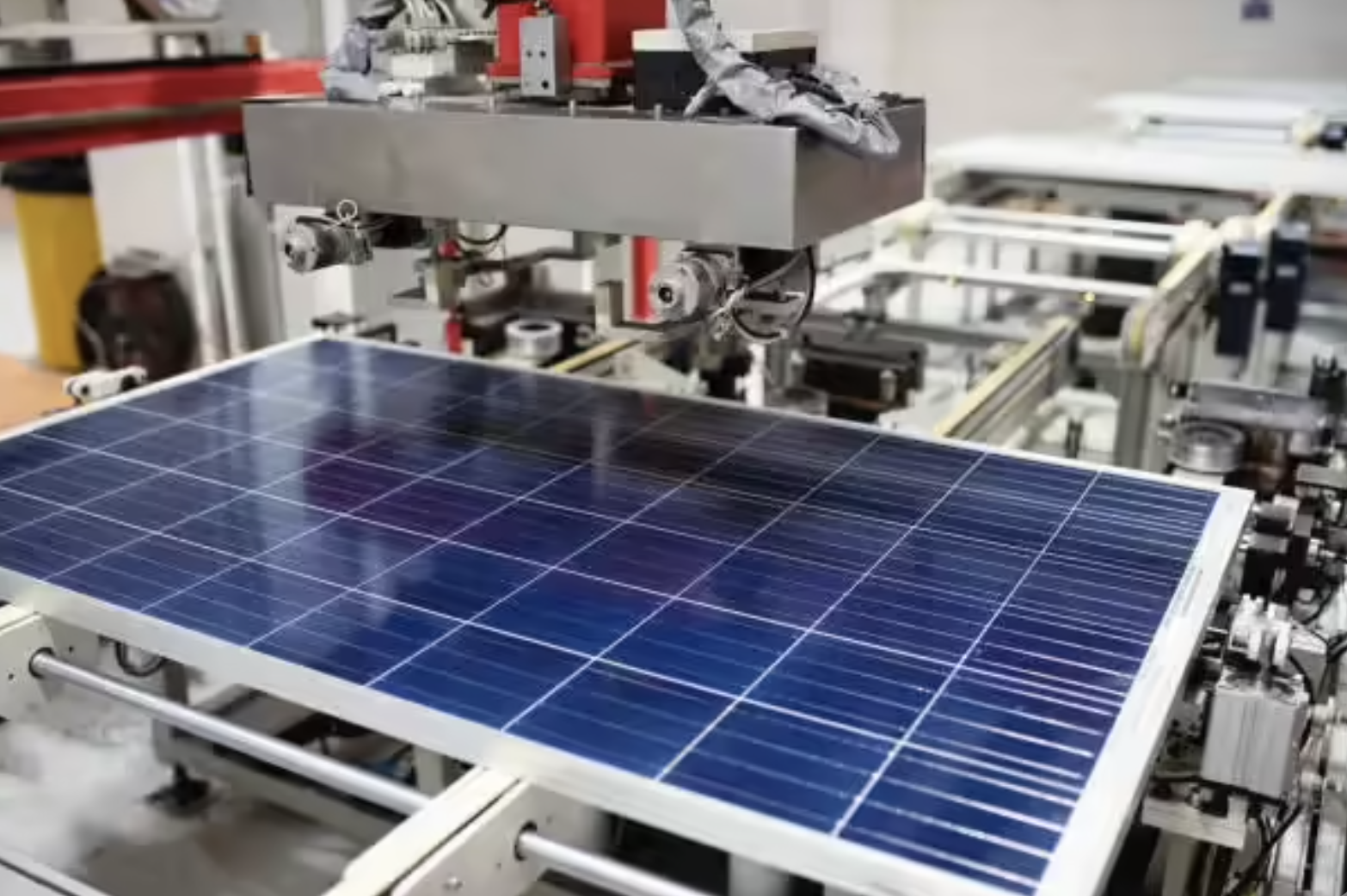
Solar cells just did the “impossible” with this 130% breakthrough.
A new “spin-flip” breakthrough could let solar panels generate more energy than they receive. Japanese scientists have found a way to push solar efficiency beyond 100% by multiplying energy from sunlight using a novel molecular system.

New laser technology for efficient solar panel recycling developed in Netherlands
Research institute TNO has created a technique that recovers over 99% of silver and high-grade silicon from solar panels. Panels are hard to break down at the end of their service life, as their glass, solar cells, and other materials are tightly bonded. TNO uses laser technology to weaken the adhesive bond between layers
That’s it for this month and year, folks! Remember, Solar isn’t just a purchase, it’s a long-term decision about cost, reliability, and governance.
If you are planning your solar journey, whether for your home or business, we would love to be part of the conversation. From C&I businesses and MSMEs to RWAs and homeowners, Horizon Renewable can help you find the solar solution that fits you to the T.
And if you’re already using solar, we would love to hear your experiences. Share your journey with us. It could inspire many more to make the switch!
Contact us at 98111 21157 | 84482 95965 | info@horizonrenewablepower.com