
Welcome to the March Edition of The Solar Dispatch!
Solar adoption is accelerating, but for most businesses, the real challenge isn’t whether to go solar. It’s understanding how. Between evolving regulations, multiple business models, and state-level policy differences, the solar landscape can often feel complex and fragmented. This month, we focus on simplifying that complexity.
The newsletter covers:
– Solar power regulatory landscape
– The latest news from the solar power industry across India
– Key global renewable energy highlights
As part of our ongoing efforts to bridge the gap between policy and practice, we recently conducted a rooftop solar awareness workshop in Jodhpur in collaboration with the Jodhpur Industries Association.
The session brought together local business owners, office bearers of the Jodhpur Industries Association, and officials from the Jodhpur Vidyut Vitran Nigam Limited to discuss the fundamentals of solar adoption, address common concerns, and decode the regulatory landscape.
We realised that business owners are well aware and interested in solar. However, questions around models, regulations, and long-term viability are holding them back.
Mr. VK Chhagani (Director, Technical) & Mr. PS Choudhary (Zonal Chief Engineer) from Jodhpur Vidyut Vitran Nigam Limited (JdVVN) explain new net metering schemes.
Decoding Solar Business Models in India: A Guide for Industrial Leaders
For industrial and commercial consumers, solar is no longer just a cost-saving initiative. It is increasingly shaped by regulatory frameworks that influence returns, risks, and long-term value. In this edition, we break down India’s solar landscape, simplifying key policies and business models to help you make more informed decisions. Read here

March saw a flurry of regulatory changes, especially in tariffs, by various states.
India Targets 60% Non-Fossil Power Capacity, 47% Emission Cuts by 2035. India aims to cut its emissions intensity by 47% from 2005 levels by 2035, reach 60% of its total installed power capacity from non-fossil fuel sources by 2035, and establish a carbon sink of 3.5 to 4 billion tons of CO₂ equivalent through forest cover by 2035, according to the new Nationally Determined Contribution (NDC) for 2031-2035.
India’s Energy Storage Up 26% in 2025, 547 MWh Added, according to the newly released 2H & Annual 2025 India’s Energy Storage Landscape Report by Mercom India Research.
India Eyes 137,500 ckm Grid Expansion to Support 900 GW Renewables by FY 2036. This expansion, estimated to cost nearly ₹7,93,300 crore, will connect renewable-energy-rich regions to demand centers across India.
Ghaziabad mandates rooftop solar and rainwater harvesting in residential building plans
Solar panel price hike expected: Metal volatility and supply chain issues drive costs up. This is due to rising silver costs and reduced export incentives from China. These factors will impact users with a potential 15% price hike. However, this is seen as a temporary situation.
This month, we are shining the spotlight on one of India’s biggest builders, literally! Cement drives infrastructure, but its carbon footprint is massive. In this edition, we see how solar power can help.
Cement quite literally builds modern India, but it comes with a steep carbon cost. India, the world’s second-largest cement producer (391 MT annually), generates ~226 MT of CO₂ emissions from this sector alone.
To grow sustainably, the industry must pivot and the solution is right above us! Solar power is already helping India’s cement leaders lower emissions, lock in savings, and strengthen competitiveness. Read more
US Solar Industry Sees 14% YoY Decline in 2025 with 43.2 GW Installed
UK Government Will Require Solar Power, Heat Pumps in All New British Homes. A planning document calls for housing developers to install solar panels and heat pumps in all new homes in England starting in 2028. Plug-in solar panels that homeowners can self-install on balconies would be widely available in the coming months.
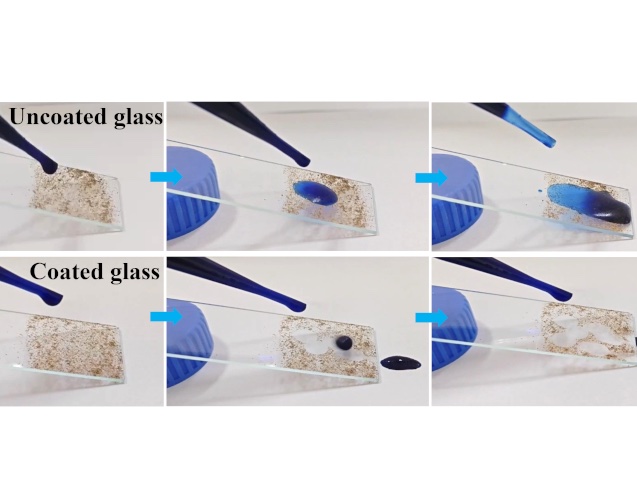
Researchers develop dirt-repelling solar panel coating that doesn’t affect light absorption
A transparent, water, dust, and dirt-repellent coating developed by researchers in Scotland, China, and India could make solar panels self-cleaning and improve their power output.
Japanese group launches floating data centre demo in Yokohama
The project involved the installation of a containerised data centre, solar power generation equipment and battery storage equipment. According to NTT, this is the first time in the world a data centre is installed on an offshore floating structure and uses only renewable energy.

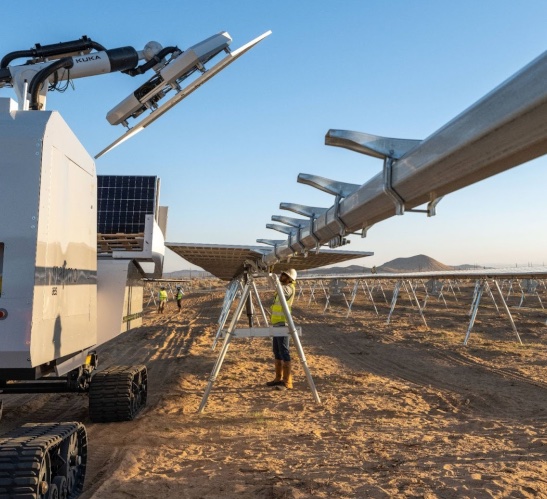
Robots install 100 MW of solar panels on 1-GW AES project
Maximo, a solar robotics company, has successfully installed 100 MW of solar panels at the AES Bellefield project in California. It could install one module/minute, with crews installing as many as 24 modules/hour/person, nearly double the output of traditional installation methods.
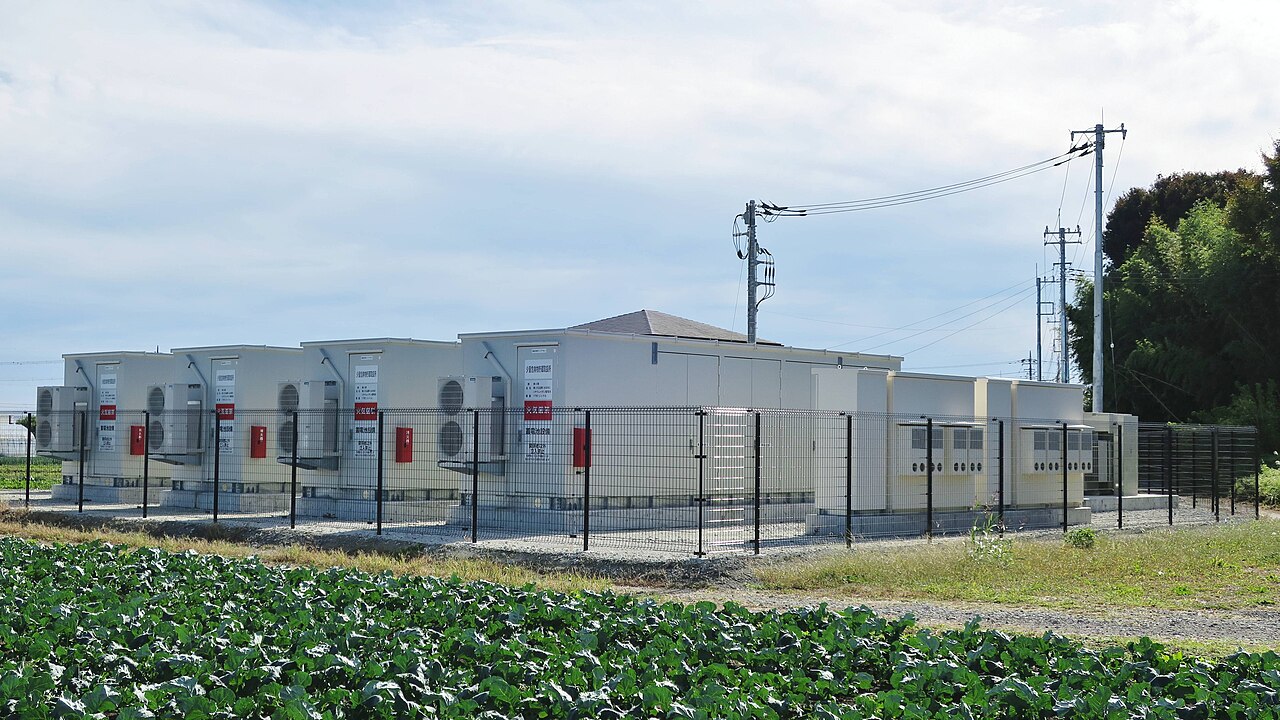
Panasonic claims world’s first trial of cybersecurity monitoring for grid-scale BESS
A Japanese joint-pilot will test grid-scale BESS with a range of local and remote attack vectors, with cybersecurity monitoring to watch for indications of anomalies.
That’s it for this month and year, folks! Remember, Solar isn’t just a purchase, it’s a long-term decision about cost, reliability, and governance.
If you are planning your solar journey, whether for your home or business, we would love to be part of the conversation. From C&I businesses and MSMEs to RWAs and homeowners, Horizon Renewable can help you find the solar solution that fits you to the T.
And if you’re already using solar, we would love to hear your experiences. Share your journey with us. It could inspire many more to make the switch!
Contact us at 98111 21157 | 84482 95965 | info@horizonrenewablepower.com
Standard rooftop solar systems are grid-tied, which means they work only when the power grid is active. During a power cut, these systems shut down for safety reasons unless you’ve opted for a hybrid solar system with battery backup.
At night, since solar panels need sunlight to generate electricity, they don’t produce power. However, net metering ensures that the excess solar energy you export during the day offsets your nighttime usage, keeping your electricity bill low.
As a rule of thumb, a 1 kW system requires around 80–100 sq. ft. of shadow-free roof area. For a typical home with a monthly bill of ₹2,000–₹3,000, a 3–5 kW system is usually sufficient, which needs 300–500 sq. ft. of usable roof space.
Flat concrete rooftops are ideal, but we can also work with sloped roofs or terrace railings using customized mounting structures.
The cost depends on the system size and whether you're opting for battery backup. For most homes, a 3 kW system without batteries may cost around ₹1.5–2 lakh after subsidies.
Thanks to the PM Surya Ghar scheme, residential customers are eligible for up to 40% subsidy, and we help you handle all paperwork for availing this benefit. Financing and EMI options are also available.
Solar systems are low maintenance. As a homeowner, you just need to clean the panels every 15–30 days with water and a soft cloth to remove dust and bird droppings.
We recommend annual inspections to check wiring, inverter health, and performance. If you prefer, we also offer Annual Maintenance Contracts (AMCs) so you don’t have to worry about upkeep at all.
At Horizon Renewable Power, our mission is to transform India’s rooftops into efficient, self-sustaining energy hubs. We aim to make solar energy affordable and accessible to a wide range of residential, commercial, and industrial customers through two models — EPC (Engineering, Procurement, and Construction) and RESCO (Renewable Energy Service Company).
Our three-year goal is ambitious yet achievable: to commission 1,000 MW of rooftop solar capacity across India. This expansion not only supports India’s clean energy ambitions but also drives significant environmental and economic impact across the communities we serve.
Installing a solar rooftop system brings a host of advantages. First and foremost, it offers substantial reductions in electricity costs, with savings of up to 60% on energy bills. Solar panels also allow homeowners and businesses to make productive use of idle roof spaces by converting them into power generators.
Beyond financial savings, solar power contributes meaningfully to the environment by reducing carbon emissions—each unit of solar electricity generated can prevent around 0.8 kg of CO₂ emissions. Additionally, solar energy systems help properties achieve sustainability certifications and net-zero targets while enhancing the visual appeal of the building with modern, sleek panel designs.
Our installation process is thorough, seamless, and professionally managed. It begins with a detailed site survey to assess the roof’s condition, orientation, shading, and load capacity. Following this, our engineers design a customized solar solution based on your specific needs.
We then handle all regulatory permissions and approvals required by local authorities. The installation itself involves setting up strong mounting structures, precision-aligning the solar panels, completing electrical cabling, and integrating inverters and safety devices. Once installed, the system undergoes a series of performance tests and inspections to ensure optimum output before the final commissioning and handover. We also guide you through setting up remote monitoring for real-time tracking
While solar panels may look similar on the surface, the difference lies in quality, design, and execution. At Horizon Renewable Power, we strictly use high-efficiency mono PERC and bifacial solar modules that guarantee higher energy yield. Our inverters and cables are sourced from top-tier global manufacturers, ensuring greater system reliability.
Moreover, our deep design and engineering expertise allow us to create solar systems that blend functionality with aesthetics, adapting installations to local climatic and architectural conditions. Above all, we strictly adhere to MNRE and BIS guidelines, ensuring that every project stands the test of time both technically and legally.
We cater to three major customer segments:
Each segment is served by dedicated teams with specialized technical knowledge to ensure tailored, high-performance solutions.
We offer two flexible financing models:
Both models are backed by thorough maintenance and support services, ensuring complete peace of mind.
Yes, particularly for residential customers. The PM Surya Ghar Yojana and other MNRE-led schemes provide significant capital subsidies of up to 40% on rooftop solar systems for homes.
Commercial and industrial customers, while typically ineligible for direct subsidies, can benefit from tax advantages and accelerated depreciation on solar assets.
Horizon assists all eligible customers in completing subsidy documentation and navigating the often tedious government application process, making the transition to solar smooth and hassle-free.
The financial benefits of solar power are both immediate and long-term. With an EPC model, customers can expect a payback period of 3–5 years depending on their location, energy tariff, and system size.
For RESCO clients, the advantage is immediate — there’s no capital investment required, and savings begin from the first electricity bill post-installation.
Over the system’s 25-year life, customers enjoy locked-in electricity rates, protection against rising energy costs, and significant cumulative savings that greatly outperform traditional investments.
Our rooftop solar systems are built to last.
Absolutely. Customer support is a critical part of our commitment.
Every installation includes access to real-time system monitoring, allowing customers to track generation, savings, and performance from their smartphones or computers.
Our dedicated operations team handles proactive maintenance, warranty claims, and system optimizations. Whether you choose EPC or RESCO, you can expect full after-sales service, 24x7 support, and scheduled site visits to ensure your solar system operates at peak efficiency
Net metering is a mechanism that allows you to feed excess solar electricity back into the grid. In return, your utility company credits you for the surplus, which offsets your electricity consumption during times when your panels aren’t producing enough (like nighttime).
This results in lower electricity bills and maximizes the return on your investment.
From an environmental perspective, every kilowatt-hour (kWh) generated by your solar rooftop reduces about 0.8 kg of carbon dioxide emissions. By switching to solar, you contribute significantly toward combating climate change and moving India closer to its green energy targets.
Customers often worry about issues like technology reliability, maintenance obligations, upfront costs, and long-term savings.
Our goal is to ensure that transitioning to solar is not just a wise financial decision, but also a smooth, trusted, and rewarding experience.