
Welcome to the 14th Edition of The Solar Dispatch!
For homeowners considering rooftop solar, choosing the right system involves more than comparing kW and prices. Design, equipment, installation quality, and after-sales support all matter. In this edition, we cover:
A successful solar installation is about more than getting the system up and running.
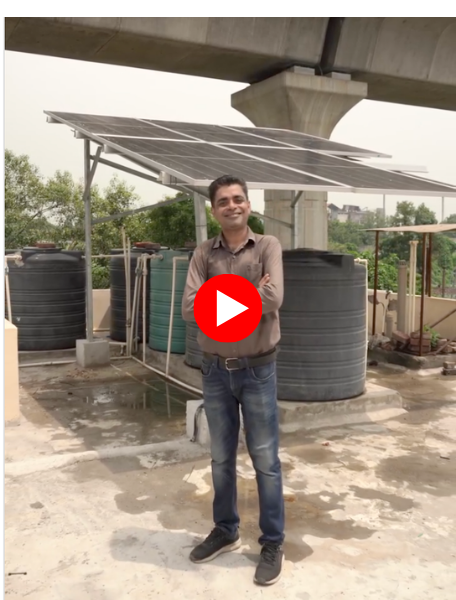
For Mr. Manoj Thakur, having a team that explained the process clearly and answered his questions made all the difference. Watch his experience
Our latest guide breaks down the process in simple terms, what to look for in an installer, how to assess system size and cost, common roadblocks, timelines, and what to expect from site visit to commissioning. Read the complete guide.

This month, we are shining the spotlight on one of India’s biggest builders, literally! Cement drives infrastructure, but its carbon footprint is massive. In this edition, we see how solar power can help.
Cement quite literally builds modern India, but it comes with a steep carbon cost. India, the world’s second-largest cement producer (391 MT annually), generates ~226 MT of CO₂ emissions from this sector alone.
To grow sustainably, the industry must pivot and the solution is right above us! Solar power is already helping India’s cement leaders lower emissions, lock in savings, and strengthen competitiveness. Read more
Renewables account for 63% of Türkiye’s installed power capacity
Spain to require data centers to source 80% of electricity from renewables
Executive order bans foreign-produced transformers, inverters, and circuit breakers for the U.S. power grid. President Trump restricts foreign-made electrical infrastructure across the United States bulk-power system. The action targets high-voltage hardware including transformers, utility-scale inverters, circuit breakers, energy storage systems, and industrial control electronics, citing concerns over potential remote access, cyber vulnerabilities, and grid disruption.
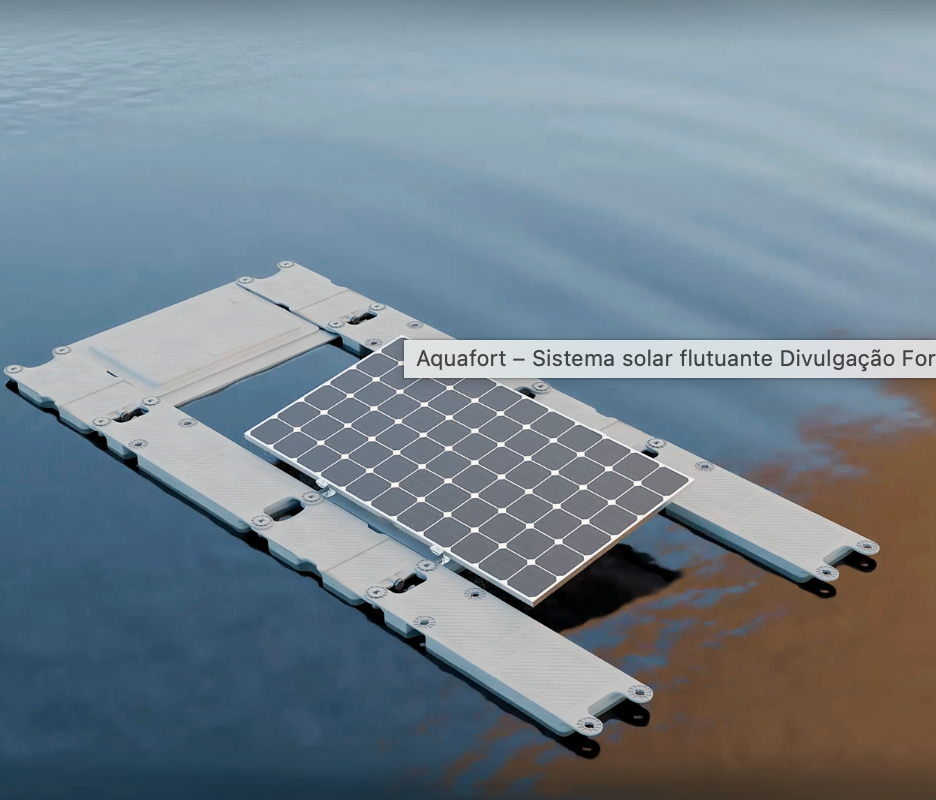
The modular structure uses floats to support PV modules while providing access for maintenance crews during inspections and servicing. The system has a stated 25-year service life and can withstand waves of up to 1 meter and wind speeds of up to 45 m/s.
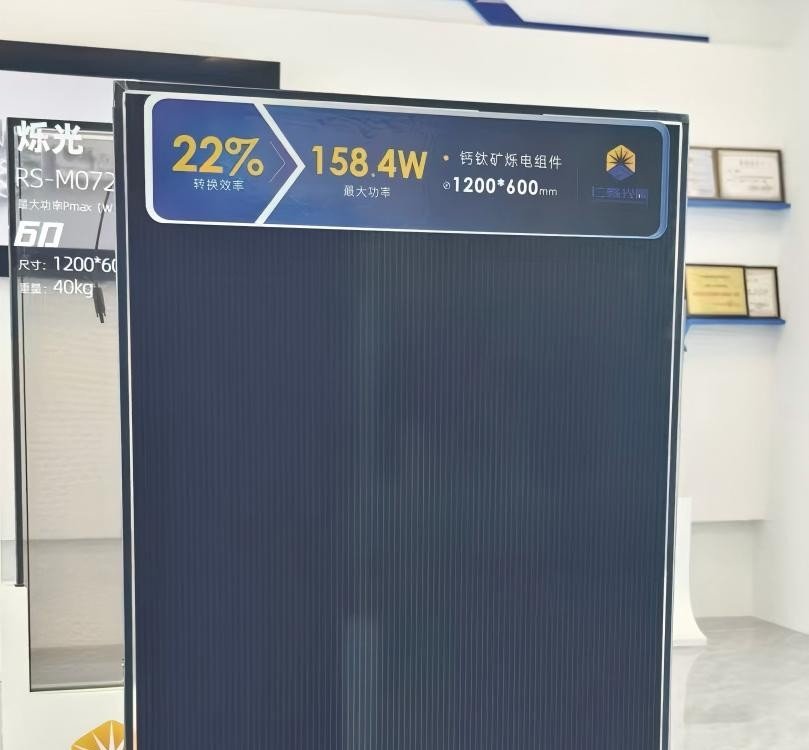
Researchers at the University of Freiburg and Fraunhofer ISE have developed semi-transparent organic solar modules achieving 9.26% efficiency and 43.2% transparency. This breakthrough offers a viable path for integrating solar power into building facades, greenhouses, and car roofs.

Researchers combined high-saturated-vapor-pressure (SVP) processing with lead carboxylate passivation. The approach delivered strong durability, with modules retaining 96% of their initial efficiency after 2,200 hours of maximum power point tracking (MPPT).
That’s it for this month and year, folks! Remember, Solar isn’t just a purchase, it’s a long-term decision about cost, reliability, and governance.
If you are planning your solar journey, whether for your home or business, we would love to be part of the conversation. From C&I businesses and MSMEs to RWAs and homeowners, Horizon Renewable can help you find the solar solution that fits you to the T.
And if you’re already using solar, we would love to hear your experiences. Share your journey with us. It could inspire many more to make the switch!
Contact us at 98111 21157 | 84482 95965 | info@horizonrenewablepower.com