
As we step into a new year, this edition turns its focus to one of India’s most overlooked energy consumers: Housing Societies. This edition covers:
With some of the most generous rooftop solar incentives announced in recent years, RWAs now have a rare opportunity to invest at scale.
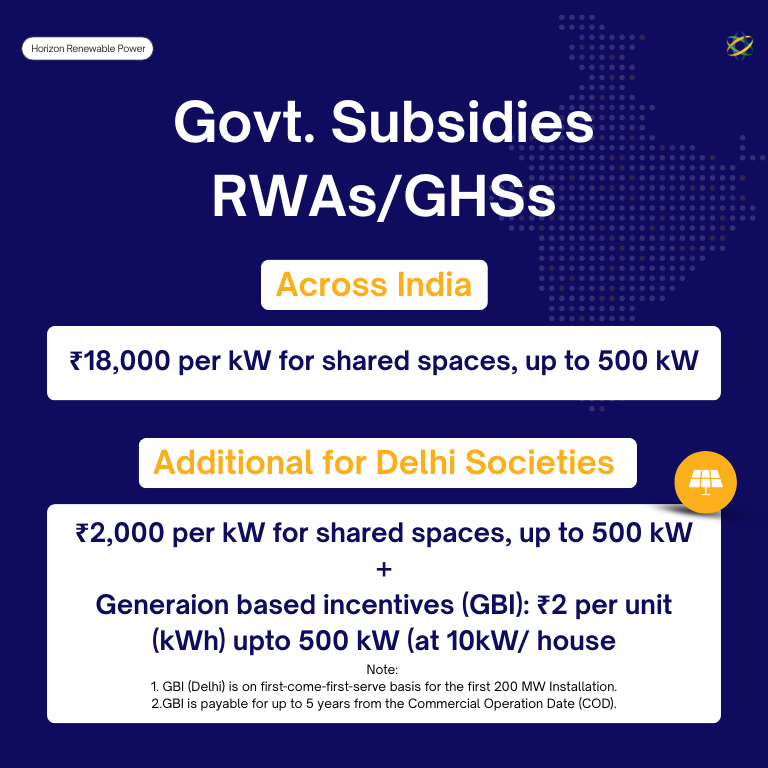
Across India, under the PM Surya Ghar Muft Bijli Yojana, housing societies can receive ₹18,000 per kW in central subsidies for shared facilities, for projects as large as 500 kW.
For RWAs in Delhi, the benefits go even further. Societies are eligible for an additional ₹2,000 per kW state subsidy, along with a generation-based incentive (GBI) of ₹2 per unit (kWh) for solar electricity produced. The GBI amount is paid directly to the society, over and above the savings from lower electricity bills.
In this short video, Siddharth Sourabh, DGM – BD & Sales, Horizon Renewable Power, explains why rooftop solar makes practical sense for RWAs, not as a “green add-on,” but as smart financial infrastructure that pays for itself over time.
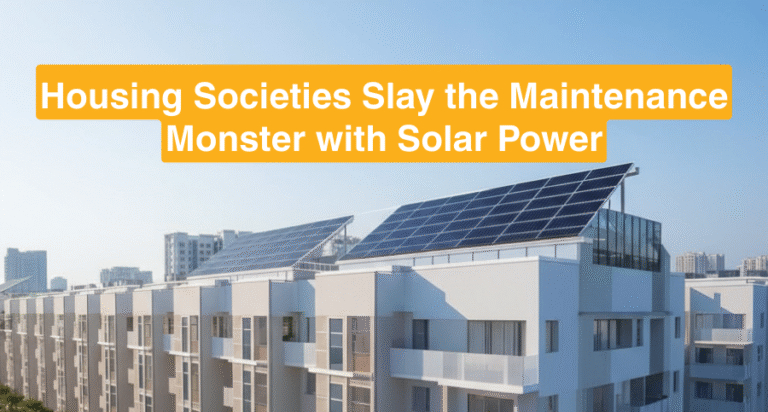
From Maintenance Burden to Energy Asset
This article breaks down how housing societies can use rooftop solar to significantly reduce CAM electricity bills, leverage central and state incentives, and adopt financing models that require little upfront capital. It also looks at what RWAs need to consider before installing—so solar becomes a reliable, 25-year energy asset rather than just another maintenance line item. Read here
The Rajasthan Govt issues the largest solar plus storage tender for 2,450mw. The tender, issued by the state-owned Rajasthan Solarpark Development Company Ltd (RSDCL), is for 2,450MW of solar power capacity, coupled with 6,400MWh of battery energy storage.
International Solar Alliance showcases India’s ‘low-cost’ solar models to the world at Davos. The body explained how programs like the “Surya Ghar” rooftop scheme and “PM KUSUM” for solar water pumps can be used by other countries to help their citizens.
Punjab industries seek 100% solar power allowance, oppose tariff hike. Representatives of various industry associations said the present cap of 63% on solar power installation in Punjab was restrictive, particularly for energy-intensive sectors where furnaces and rolling mills operate round-the-clock.
Coal power generation fell in both China and India in 2025, the first simultaneous drop in half a century, after each nation added record amounts of clean energy. The new analysis for Carbon Brief shows that electricity generation from coal in India fell by 3.0% year-on-year (57 terawatt hours, TWh) and in China by 1.6% (58TWh).
IREDA Subsidiary Approves First Overseas Solar Project Loan. IREDA Global Green Energy Finance IFSC (IGGEFIL), a wholly owned subsidiary of the government-owned lender, IREDA, has approved its first international green energy loan, marking the formal start of its overseas financing operations.The loan of $22.5 million will be utilized to develop a 100MW solar project in Zambia.
This month, we are shining the spotlight on one of India’s biggest builders, literally! Cement drives infrastructure, but its carbon footprint is massive. In this edition, we see how solar power can help.
Cement quite literally builds modern India, but it comes with a steep carbon cost. India, the world’s second-largest cement producer (391 MT annually), generates ~226 MT of CO₂ emissions from this sector alone.
To grow sustainably, the industry must pivot and the solution is right above us! Solar power is already helping India’s cement leaders lower emissions, lock in savings, and strengthen competitiveness. Read more
China to Scrap Export VAT Rebates for Solar Products from April 1, 2026. China will cancel value-added tax (VAT) export rebates for photovoltaic (PV) and other related products from April 1, 2026, the Ministry of Finance and the State Taxation Administration have announced.
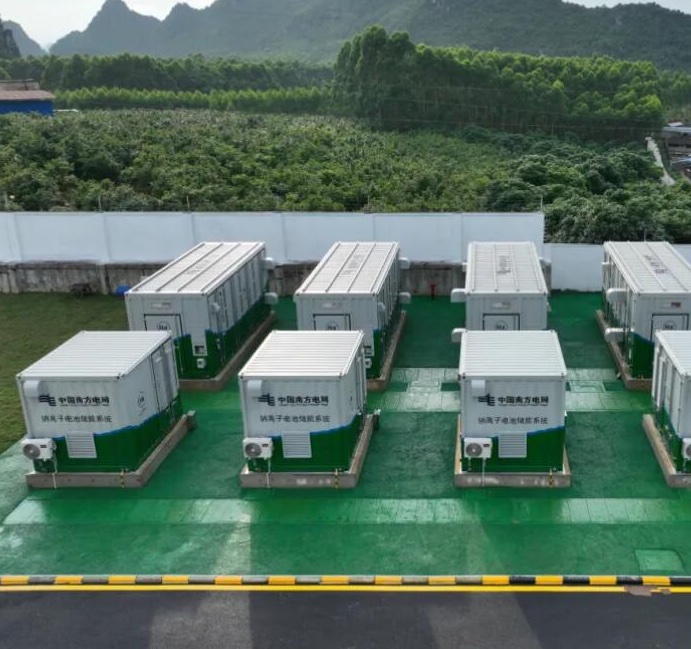
China’s switches on world’s first GWh-scale supercapacitor-energy storage project. The 500 MW/1 GWh Jiayuguan NingSheng project combines lithium batteries and supercapacitors to support grid stability and renewables integration.
MENA region installs 12.2 GW of solar in 2025. Report from Dii Desert Energy says that with the Middle East and North Africa’s project pipeline of renewables now standing at 202 GW, solar is likely to drive the region past its aggregated national ambitions for renewables of 235 GW by 2030.
Independent power producer Treaty Oak Clean Energy has kicked off construction on two solar farms that will add 385 megawatts of renewable energy capacity to Louisiana
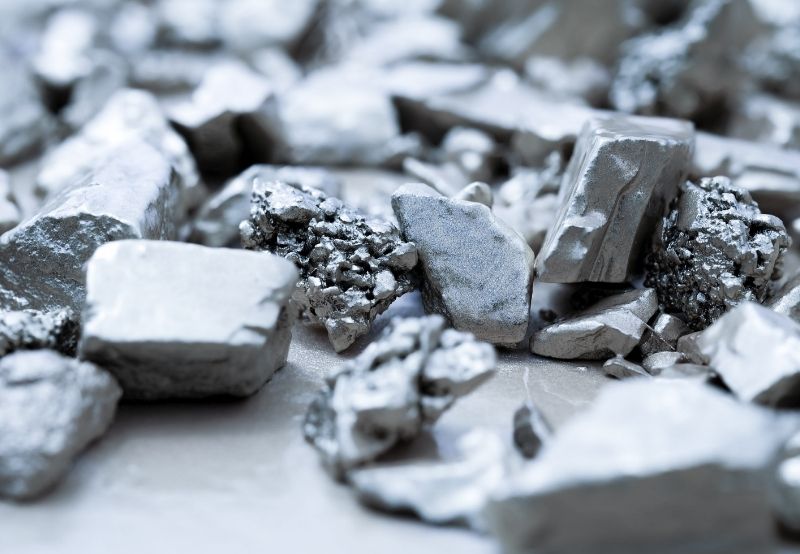
Researchers Develop Method to Recover 97% Silver from Used Solar Panels
Researchers at the University of Newcastle have developed a safe and effective method to recover high-grade silver from end-of-life solar panels without using acid.
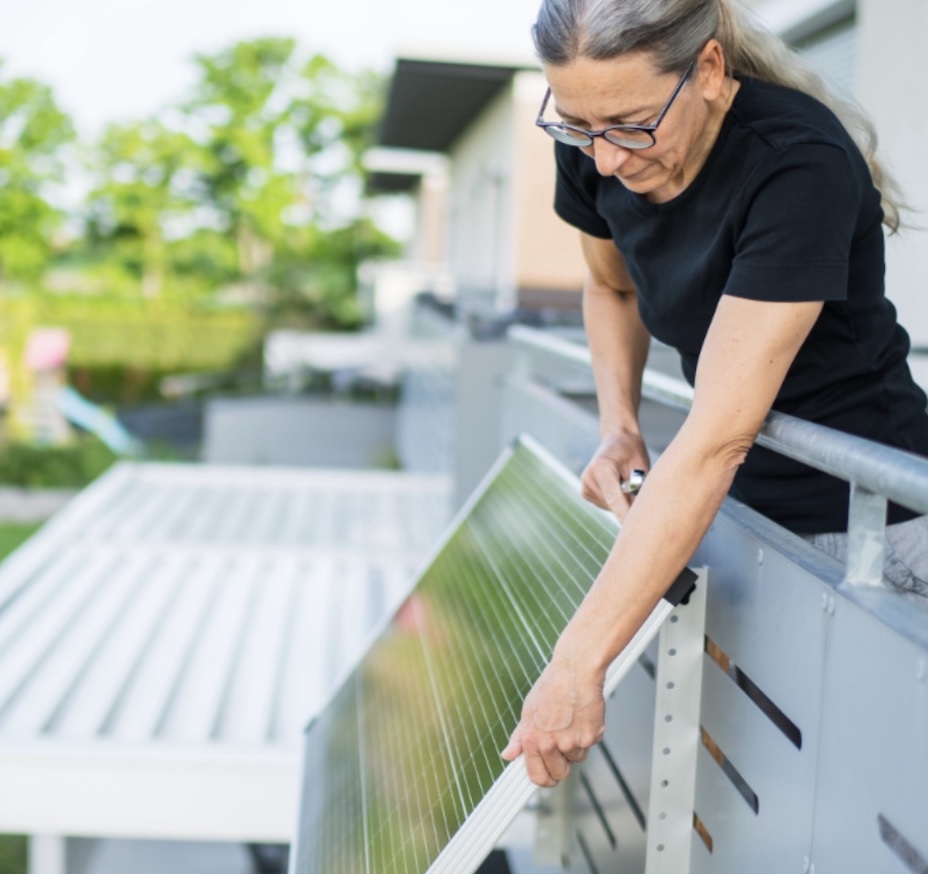
By addressing safety risks associated with plug-in solar systems, UL Solution will enable safer, more accessible solar power options for residents of multi-unit buildings.
Sodium-ion battery cells already near lithium-ion cost parity, set to get cheaper
By 2050, sodium-ion batteries with fast learning rates could deliver storage at 11–14 €/MWh – cheaper than lithium-ion at 16–22 €/MWh – while also offering higher energy-to-power ratios and high cycle durability, a new research finds.
That’s it for this month and year, folks! Remember, Solar isn’t just a purchase, it’s a long-term decision about cost, reliability, and governance.
If you are planning your solar journey, whether for your home or business, we would love to be part of the conversation. From C&I businesses and MSMEs to RWAs and homeowners, Horizon Renewable can help you find the solar solution that fits you to the T.
And if you’re already using solar, we would love to hear your experiences. Share your journey with us. It could inspire many more to make the switch!
Contact us at 98111 21157 | 84482 95965 | info@horizonrenewablepower.com
Standard rooftop solar systems are grid-tied, which means they work only when the power grid is active. During a power cut, these systems shut down for safety reasons unless you’ve opted for a hybrid solar system with battery backup.
At night, since solar panels need sunlight to generate electricity, they don’t produce power. However, net metering ensures that the excess solar energy you export during the day offsets your nighttime usage, keeping your electricity bill low.
As a rule of thumb, a 1 kW system requires around 80–100 sq. ft. of shadow-free roof area. For a typical home with a monthly bill of ₹2,000–₹3,000, a 3–5 kW system is usually sufficient, which needs 300–500 sq. ft. of usable roof space.
Flat concrete rooftops are ideal, but we can also work with sloped roofs or terrace railings using customized mounting structures.
The cost depends on the system size and whether you're opting for battery backup. For most homes, a 3 kW system without batteries may cost around ₹1.5–2 lakh after subsidies.
Thanks to the PM Surya Ghar scheme, residential customers are eligible for up to 40% subsidy, and we help you handle all paperwork for availing this benefit. Financing and EMI options are also available.
Solar systems are low maintenance. As a homeowner, you just need to clean the panels every 15–30 days with water and a soft cloth to remove dust and bird droppings.
We recommend annual inspections to check wiring, inverter health, and performance. If you prefer, we also offer Annual Maintenance Contracts (AMCs) so you don’t have to worry about upkeep at all.
At Horizon Renewable Power, our mission is to transform India’s rooftops into efficient, self-sustaining energy hubs. We aim to make solar energy affordable and accessible to a wide range of residential, commercial, and industrial customers through two models — EPC (Engineering, Procurement, and Construction) and RESCO (Renewable Energy Service Company).
Our three-year goal is ambitious yet achievable: to commission 1,000 MW of rooftop solar capacity across India. This expansion not only supports India’s clean energy ambitions but also drives significant environmental and economic impact across the communities we serve.
Installing a solar rooftop system brings a host of advantages. First and foremost, it offers substantial reductions in electricity costs, with savings of up to 60% on energy bills. Solar panels also allow homeowners and businesses to make productive use of idle roof spaces by converting them into power generators.
Beyond financial savings, solar power contributes meaningfully to the environment by reducing carbon emissions—each unit of solar electricity generated can prevent around 0.8 kg of CO₂ emissions. Additionally, solar energy systems help properties achieve sustainability certifications and net-zero targets while enhancing the visual appeal of the building with modern, sleek panel designs.
Our installation process is thorough, seamless, and professionally managed. It begins with a detailed site survey to assess the roof’s condition, orientation, shading, and load capacity. Following this, our engineers design a customized solar solution based on your specific needs.
We then handle all regulatory permissions and approvals required by local authorities. The installation itself involves setting up strong mounting structures, precision-aligning the solar panels, completing electrical cabling, and integrating inverters and safety devices. Once installed, the system undergoes a series of performance tests and inspections to ensure optimum output before the final commissioning and handover. We also guide you through setting up remote monitoring for real-time tracking
While solar panels may look similar on the surface, the difference lies in quality, design, and execution. At Horizon Renewable Power, we strictly use high-efficiency mono PERC and bifacial solar modules that guarantee higher energy yield. Our inverters and cables are sourced from top-tier global manufacturers, ensuring greater system reliability.
Moreover, our deep design and engineering expertise allow us to create solar systems that blend functionality with aesthetics, adapting installations to local climatic and architectural conditions. Above all, we strictly adhere to MNRE and BIS guidelines, ensuring that every project stands the test of time both technically and legally.
We cater to three major customer segments:
Each segment is served by dedicated teams with specialized technical knowledge to ensure tailored, high-performance solutions.
We offer two flexible financing models:
Both models are backed by thorough maintenance and support services, ensuring complete peace of mind.
Yes, particularly for residential customers. The PM Surya Ghar Yojana and other MNRE-led schemes provide significant capital subsidies of up to 40% on rooftop solar systems for homes.
Commercial and industrial customers, while typically ineligible for direct subsidies, can benefit from tax advantages and accelerated depreciation on solar assets.
Horizon assists all eligible customers in completing subsidy documentation and navigating the often tedious government application process, making the transition to solar smooth and hassle-free.
The financial benefits of solar power are both immediate and long-term. With an EPC model, customers can expect a payback period of 3–5 years depending on their location, energy tariff, and system size.
For RESCO clients, the advantage is immediate — there’s no capital investment required, and savings begin from the first electricity bill post-installation.
Over the system’s 25-year life, customers enjoy locked-in electricity rates, protection against rising energy costs, and significant cumulative savings that greatly outperform traditional investments.
Our rooftop solar systems are built to last.
Absolutely. Customer support is a critical part of our commitment.
Every installation includes access to real-time system monitoring, allowing customers to track generation, savings, and performance from their smartphones or computers.
Our dedicated operations team handles proactive maintenance, warranty claims, and system optimizations. Whether you choose EPC or RESCO, you can expect full after-sales service, 24x7 support, and scheduled site visits to ensure your solar system operates at peak efficiency
Net metering is a mechanism that allows you to feed excess solar electricity back into the grid. In return, your utility company credits you for the surplus, which offsets your electricity consumption during times when your panels aren’t producing enough (like nighttime).
This results in lower electricity bills and maximizes the return on your investment.
From an environmental perspective, every kilowatt-hour (kWh) generated by your solar rooftop reduces about 0.8 kg of carbon dioxide emissions. By switching to solar, you contribute significantly toward combating climate change and moving India closer to its green energy targets.
Customers often worry about issues like technology reliability, maintenance obligations, upfront costs, and long-term savings.
Our goal is to ensure that transitioning to solar is not just a wise financial decision, but also a smooth, trusted, and rewarding experience.