
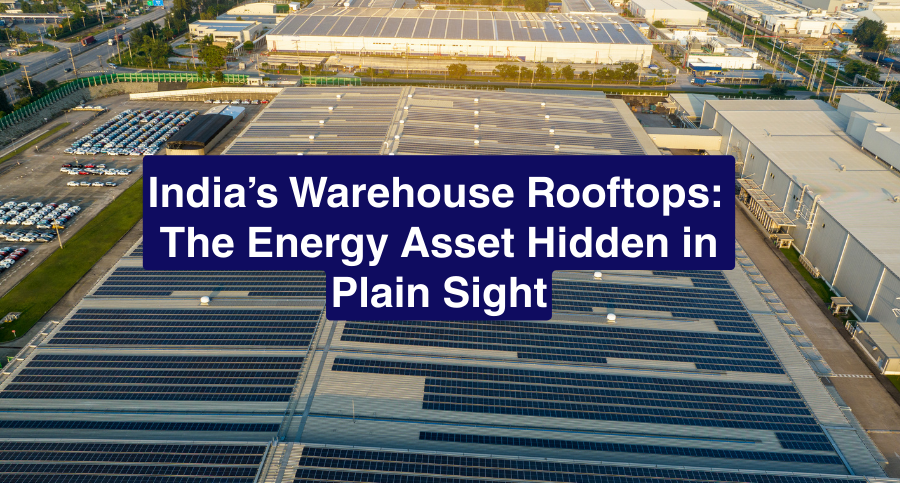
The Indian warehousing landscape has reached a historic inflection point. As of February 2026, the sector has transitioned from simple “storage sheds” to high-tech, integrated asset classes. With the total warehousing stock across Tier-1 and Tier-2 cities surging to 610 million square feet, the industry is no longer just battling for space; it is battling for energy independence.
With commercial grid tariffs in industrial hubs like Maharashtra and Gujarat touching ₹11–13/kWh, the logic for solarization has shifted from “green branding” to “survival economics.”
(Note: An electrified household in Delhi consumes about 250-270 units or kWh of electricity per month on average. This is more than in other cities – Chandigarh: 208 units; Ahmedabad: 160 units; and Mumbai: 110 units – mostly due to high ownership of air-conditioners and appliances, as well as tariff subsidies in Delhi.)
India enters 2026 having achieved a historic milestone: 51% of its total installed power capacity now comes from non-fossil sources. For warehouse operators, this isn’t just a statistic; it represents a fundamental change in how DISCOMs (Distribution Companies) view industrial consumers.
For the logistics sector, this macro trend is mirrored in the rise of Grade-A warehousing, which now constitutes 53% of total stock. These modern facilities are increasingly being built “Solar-Ready,” designed to handle the structural load of high-efficiency modules that were once considered a luxury but are now an operational necessity.
The financial barrier to entry has never been lower. In the first quarter of 2025, India witnessed a landmark 12% decline in solar PV system costs. This price correction, driven by a domestic manufacturing surge to 140 GW per annum, has fundamentally altered the Return on Investment (ROI) for warehouse owners.
Beyond direct savings, the Indian regulatory framework offers two powerful “hidden” financial engines:
1. Accelerated Depreciation
Under Section 32 of the Income Tax Act, businesses can claim a 40% depreciation rate on solar assets in the first year and an additional 20% in the second. For high-growth logistics firms, this serves as a massive tax shield, effectively reducing the project’s net cost by nearly a third in the first 24 months.
2. The Indian Carbon Market
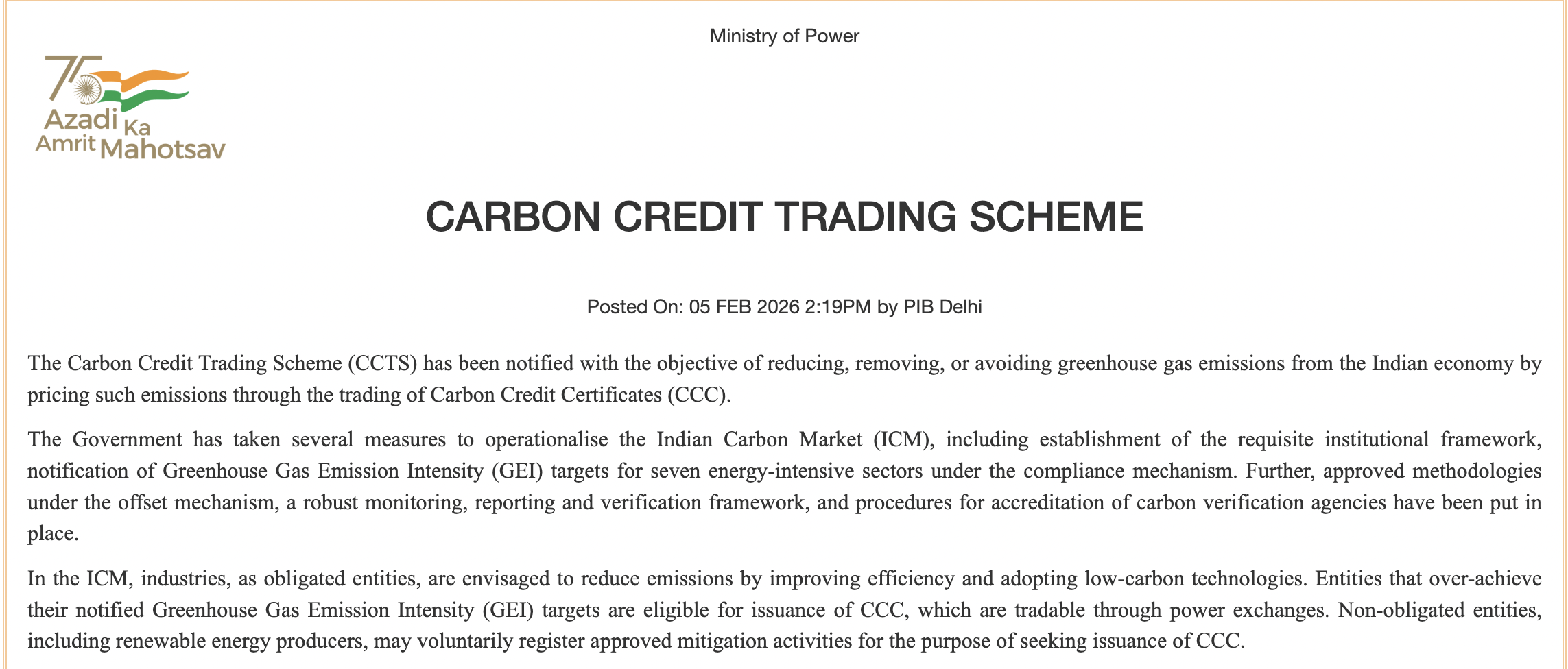
2026 marks the operational launch of the Carbon Credit Trading Scheme (CCTS). Warehouses that over-perform on their emission targets can now “mint” Carbon Credit Certificates (CCCs). With the EU’s Carbon Border Adjustment Mechanism (CBAM) now taxing high-carbon imports, these domestic credits have become liquid assets, tradable on Indian energy exchanges (IEX/PXIL).
The “Always-On” Resilience Hub: Integrate Battery Energy Storage Systems (BESS) to store daytime solar for 24/7 operations. BESS capacity in India has surged tenfold in the last 12 months, from 200 MWh in 2025 to 5 GWh in 2026.
For cold-chain warehouses, this is a game-changer. By storing solar energy in Lithium-Iron-Phosphate (LFP) or Sodium-Ion batteries, facilities can maintain the “Cold Chain” 24/7 without ever drawing from the grid during peak evening hours when tariffs are highest.
The “Energy-Integrated” Fleet Hub: As India’s last-mile delivery fleets move toward 100% electrification, the warehouse has become the new “petrol pump.”
Use your warehouse as a private “petrol pump” for your delivery vehicles. By utilizing V2G (Vehicle-to-Grid) technology, you can charge your fleet at your warehouse – become green and save on fuel costs.
The “Merchant Power” Model: You can even earn from your warehouse. For “Mega-Warehouses” facing net-metering caps, pivot to Group Captive models or Virtual PPAs. By co-owning larger off-site solar farms, you move from being a simple consumer to a power generator, effectively monetizing excess energy as a consistent revenue stream.
In 2026, a warehouse without solar is like a delivery van with a hole in its fuel tank. As automation penetration in Indian warehouses is projected to rise from 4% to 76% by 2030, the demand for reliable, cheap power will only grow.
The “Solarized Warehouse” is no longer a pilot project; it is the backbone of India’s modern supply chain.
Reach out to Horizon to understand what going solar could look like for your warehouse. Call us at +91 9811121157 | 84482 95965
A single discussion today could unlock decades of savings as well as a new revenue generating model for your company.
Standard rooftop solar systems are grid-tied, which means they work only when the power grid is active. During a power cut, these systems shut down for safety reasons unless you’ve opted for a hybrid solar system with battery backup.
At night, since solar panels need sunlight to generate electricity, they don’t produce power. However, net metering ensures that the excess solar energy you export during the day offsets your nighttime usage, keeping your electricity bill low.
As a rule of thumb, a 1 kW system requires around 80–100 sq. ft. of shadow-free roof area. For a typical home with a monthly bill of ₹2,000–₹3,000, a 3–5 kW system is usually sufficient, which needs 300–500 sq. ft. of usable roof space.
Flat concrete rooftops are ideal, but we can also work with sloped roofs or terrace railings using customized mounting structures.
The cost depends on the system size and whether you're opting for battery backup. For most homes, a 3 kW system without batteries may cost around ₹1.5–2 lakh after subsidies.
Thanks to the PM Surya Ghar scheme, residential customers are eligible for up to 40% subsidy, and we help you handle all paperwork for availing this benefit. Financing and EMI options are also available.
Solar systems are low maintenance. As a homeowner, you just need to clean the panels every 15–30 days with water and a soft cloth to remove dust and bird droppings.
We recommend annual inspections to check wiring, inverter health, and performance. If you prefer, we also offer Annual Maintenance Contracts (AMCs) so you don’t have to worry about upkeep at all.
At Horizon Renewable Power, our mission is to transform India’s rooftops into efficient, self-sustaining energy hubs. We aim to make solar energy affordable and accessible to a wide range of residential, commercial, and industrial customers through two models — EPC (Engineering, Procurement, and Construction) and RESCO (Renewable Energy Service Company).
Our three-year goal is ambitious yet achievable: to commission 1,000 MW of rooftop solar capacity across India. This expansion not only supports India’s clean energy ambitions but also drives significant environmental and economic impact across the communities we serve.
Installing a solar rooftop system brings a host of advantages. First and foremost, it offers substantial reductions in electricity costs, with savings of up to 60% on energy bills. Solar panels also allow homeowners and businesses to make productive use of idle roof spaces by converting them into power generators.
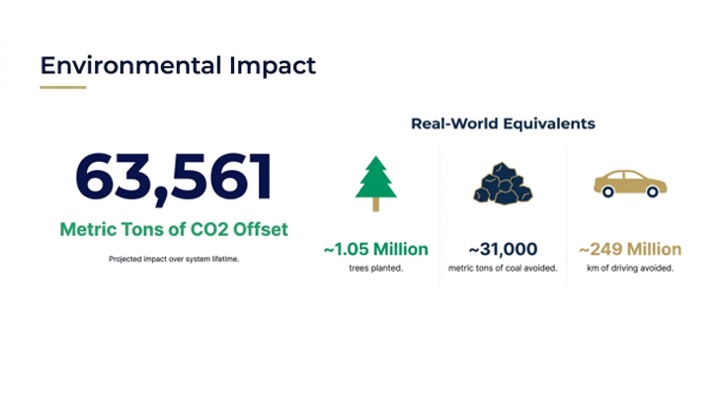
Beyond financial savings, solar power contributes meaningfully to the environment by reducing carbon emissions—each unit of solar electricity generated can prevent around 0.8 kg of CO₂ emissions. Additionally, solar energy systems help properties achieve sustainability certifications and net-zero targets while enhancing the visual appeal of the building with modern, sleek panel designs.
Our installation process is thorough, seamless, and professionally managed. It begins with a detailed site survey to assess the roof’s condition, orientation, shading, and load capacity. Following this, our engineers design a customized solar solution based on your specific needs.
We then handle all regulatory permissions and approvals required by local authorities. The installation itself involves setting up strong mounting structures, precision-aligning the solar panels, completing electrical cabling, and integrating inverters and safety devices. Once installed, the system undergoes a series of performance tests and inspections to ensure optimum output before the final commissioning and handover. We also guide you through setting up remote monitoring for real-time tracking
While solar panels may look similar on the surface, the difference lies in quality, design, and execution. At Horizon Renewable Power, we strictly use high-efficiency mono PERC and bifacial solar modules that guarantee higher energy yield. Our inverters and cables are sourced from top-tier global manufacturers, ensuring greater system reliability.
Moreover, our deep design and engineering expertise allow us to create solar systems that blend functionality with aesthetics, adapting installations to local climatic and architectural conditions. Above all, we strictly adhere to MNRE and BIS guidelines, ensuring that every project stands the test of time both technically and legally.
We cater to three major customer segments:
Each segment is served by dedicated teams with specialized technical knowledge to ensure tailored, high-performance solutions.
We offer two flexible financing models:
Both models are backed by thorough maintenance and support services, ensuring complete peace of mind.
Yes, particularly for residential customers. The PM Surya Ghar Yojana and other MNRE-led schemes provide significant capital subsidies of up to 40% on rooftop solar systems for homes.
Commercial and industrial customers, while typically ineligible for direct subsidies, can benefit from tax advantages and accelerated depreciation on solar assets.
Horizon assists all eligible customers in completing subsidy documentation and navigating the often tedious government application process, making the transition to solar smooth and hassle-free.
The financial benefits of solar power are both immediate and long-term. With an EPC model, customers can expect a payback period of 3–5 years depending on their location, energy tariff, and system size.
For RESCO clients, the advantage is immediate — there’s no capital investment required, and savings begin from the first electricity bill post-installation.
Over the system’s 25-year life, customers enjoy locked-in electricity rates, protection against rising energy costs, and significant cumulative savings that greatly outperform traditional investments.
Our rooftop solar systems are built to last.
Absolutely. Customer support is a critical part of our commitment.
Every installation includes access to real-time system monitoring, allowing customers to track generation, savings, and performance from their smartphones or computers.
Our dedicated operations team handles proactive maintenance, warranty claims, and system optimizations. Whether you choose EPC or RESCO, you can expect full after-sales service, 24x7 support, and scheduled site visits to ensure your solar system operates at peak efficiency
Net metering is a mechanism that allows you to feed excess solar electricity back into the grid. In return, your utility company credits you for the surplus, which offsets your electricity consumption during times when your panels aren’t producing enough (like nighttime).
This results in lower electricity bills and maximizes the return on your investment.
From an environmental perspective, every kilowatt-hour (kWh) generated by your solar rooftop reduces about 0.8 kg of carbon dioxide emissions. By switching to solar, you contribute significantly toward combating climate change and moving India closer to its green energy targets.
Customers often worry about issues like technology reliability, maintenance obligations, upfront costs, and long-term savings.
Our goal is to ensure that transitioning to solar is not just a wise financial decision, but also a smooth, trusted, and rewarding experience.